



Video shows thousands fleeing the Canadian wildfires in Alberta
The eerie aftermath: Charred remains of towns devastated by supercharged Alberta fire emerge as evacuees are moved a second time as the fire spreads south
- Footage taken by resident Jamee Lowndes shows charred remains of Fort McMurray’s Beacon Hill neighborhood
- More than 1,110 firefighters are battling 49 wildfires across Alberta – seven of which are deemed out of control
- At least 88,000 people have been evacuated and more than 1,600 homes have been torched in Fort McMurray
- Alberta has declared a state of emergency and Prime Minister Justin Trudeau branded the situation ‘terrifying’
This moving footage shows the scorched remains of Fort McMurray’s Beacon Hill neighborhood in the wake of the fire that has ripped through the city and forced all 88,000 residents to flee.
The video, taken by resident Jamee Lowndes, shows the charred remains of cars, devastated homes and blackened tree branches.
There are reminders of the once-thriving community, such as the remains of a bus shelter, but all that has been left now is debris and rubble.
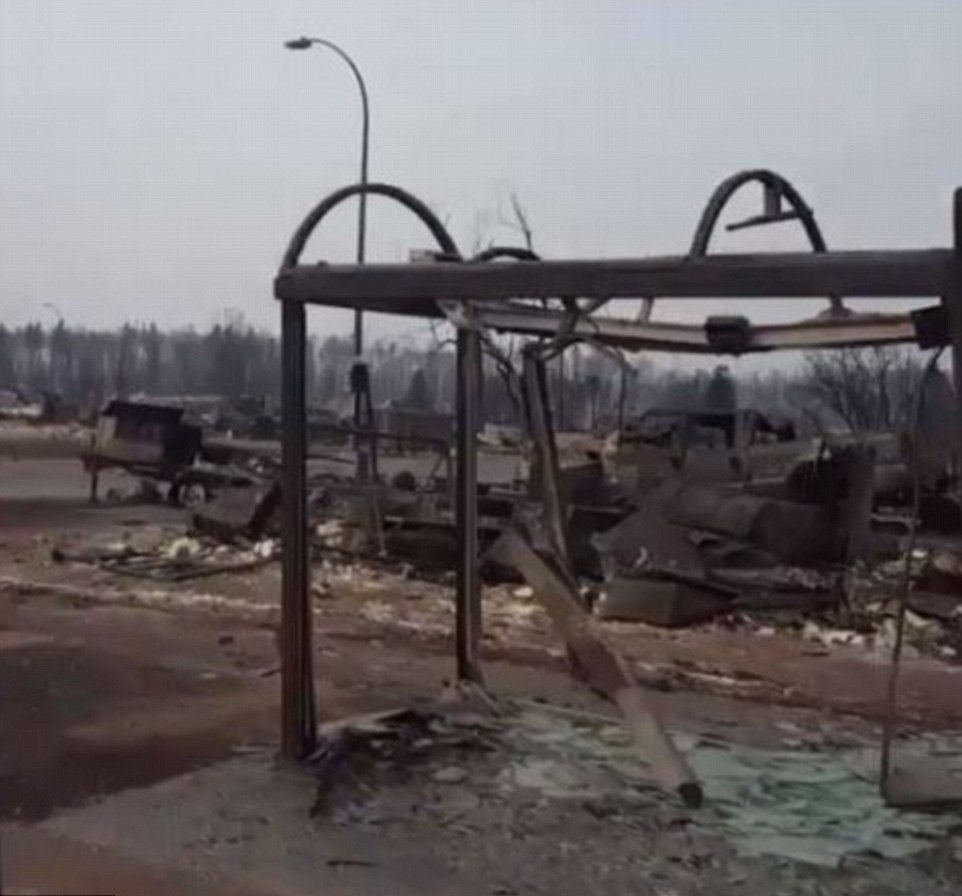
The footage, taken by Jamee Lowndes, a heavy equipment operator, showed the devastation the fire left behind in Fort McMurray
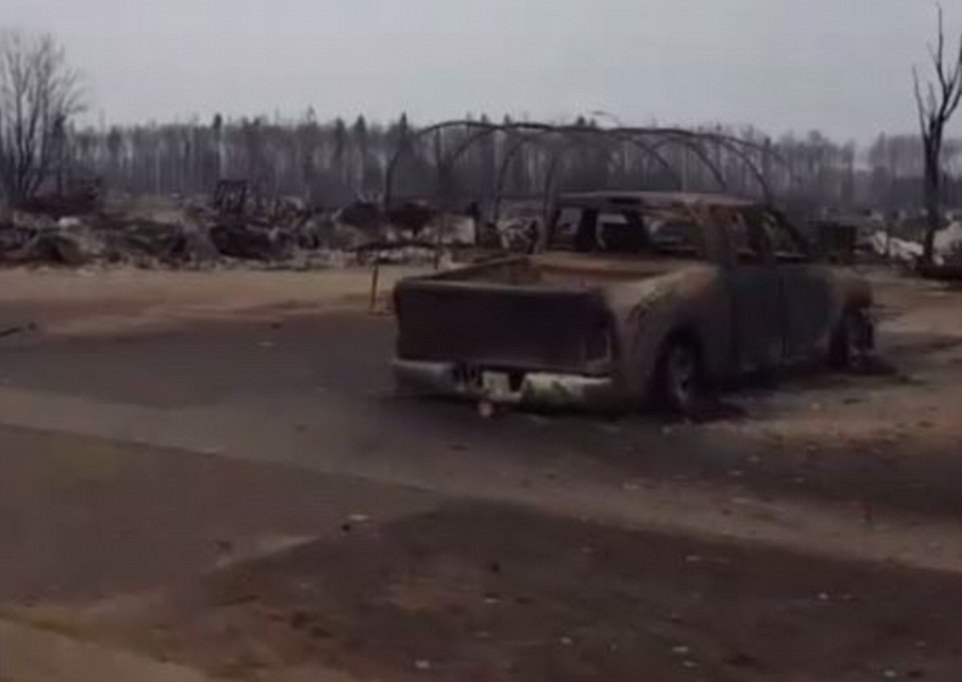
The charred remains of a car in Fort McMurray’s Beacon Hill neighborhood in the eerie footage taken in the wake of the raging inferno
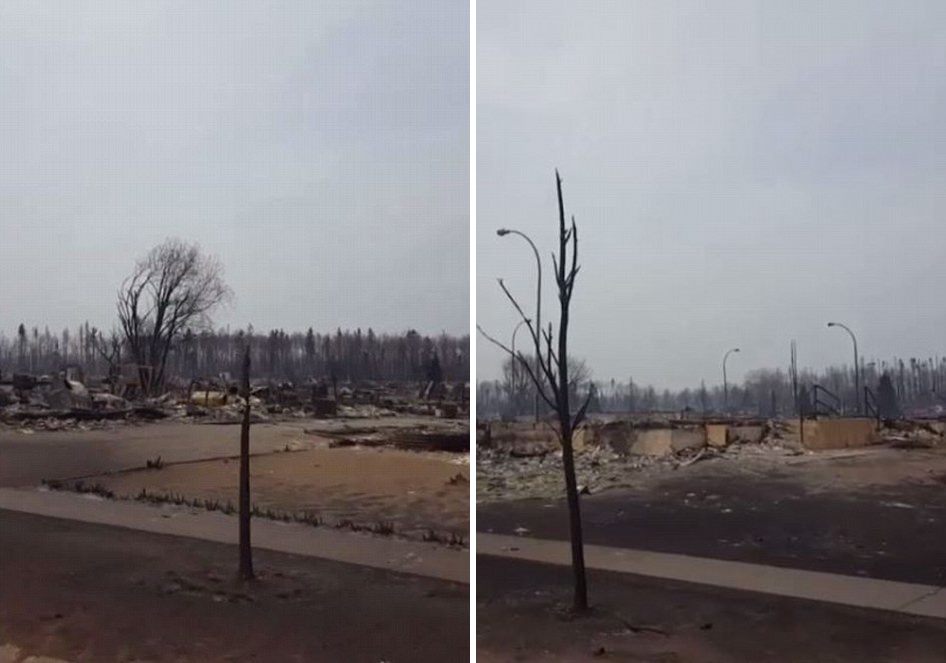
The once-thriving community was destroyed by the fire that ripped through the city and left 88,000 residents homeless
A state of emergency has been declared in Alberta, in Canada, after the wildfire forced all the residents in Fort McMurray to leave their homes. The entire city was evacuated three days ago. Most fled south, but some headed north.
The blaze started on Sunday in Canada’s oil sands region and grew more than tenfold from 18,500 acres (7,500 hectares) on Wednesday to some 210,000 acres (85,000 hectares) on Thursday, an area roughly 10 times the size of Manhattan.
–
More than 1,110 firefighters, 145 helicopters, 138 pieces of heavy equipment and 22 air tankers were fighting a total of 49 wildfires. Seven of the blazes are deemed out of control last night.
Officials said conditions remained extreme across the region and that strong winds were helping spread the fire, which appears to be moving south, away from Fort McMurray.
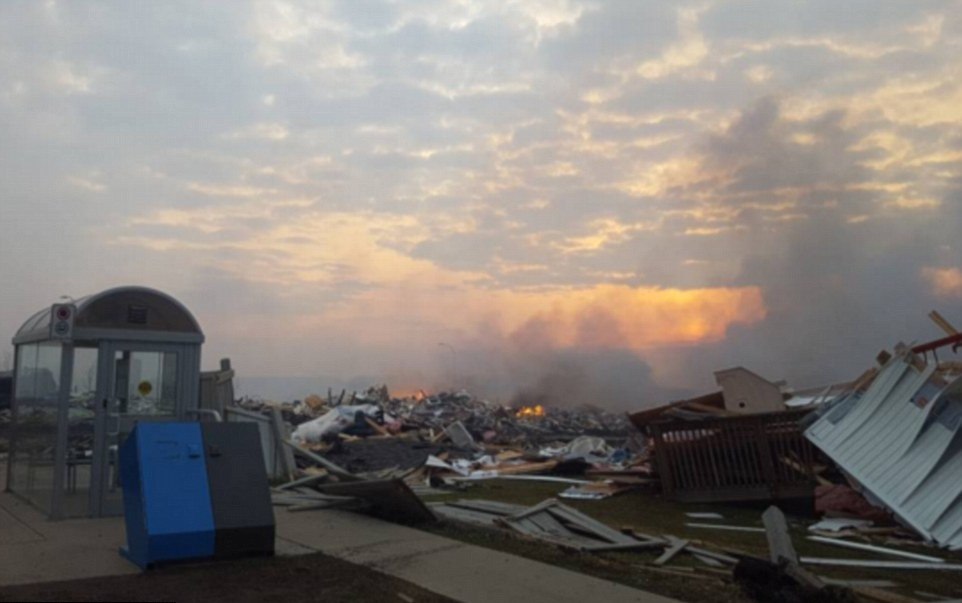
This picture shows the destruction the fire has left behind with piles of rubble and debris left behind in Timberlea neighborhood
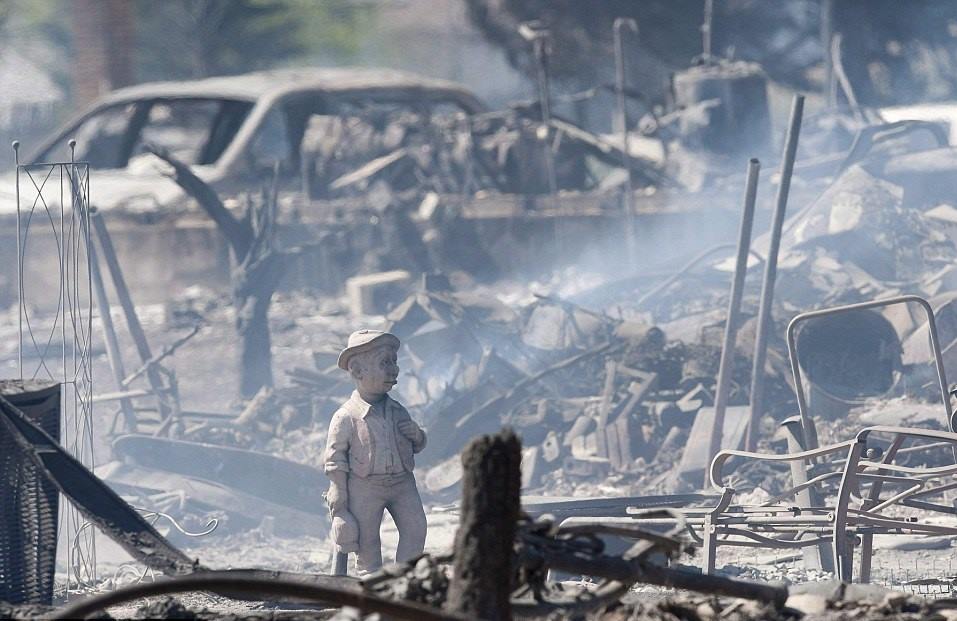
The smouldering remains of houses in Slave Lake, in northern Alberta, following the wildfire that has seen 88,000 flee their homes
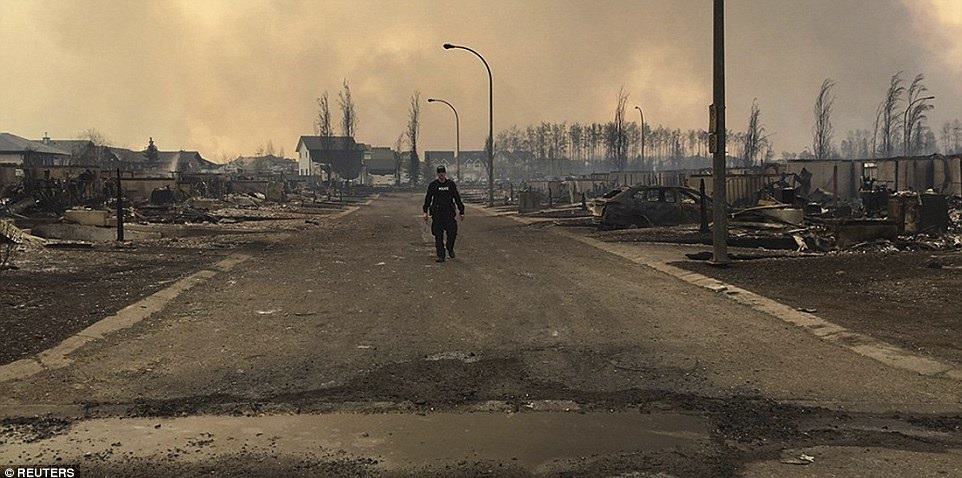
Horrific: A police officer surveys the damage on a street in Fort McMurray which looked apocalyptic on Thursday
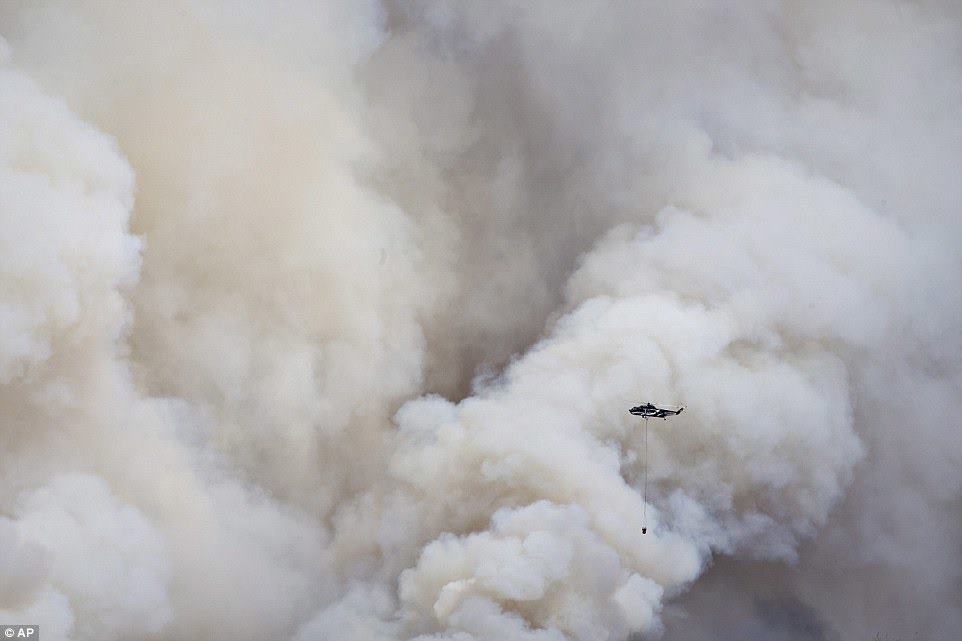
A helicopter is dwarfed by the smoke billowing up into the sky as crews try to take aid to displaced families (pictured on Wednesday)
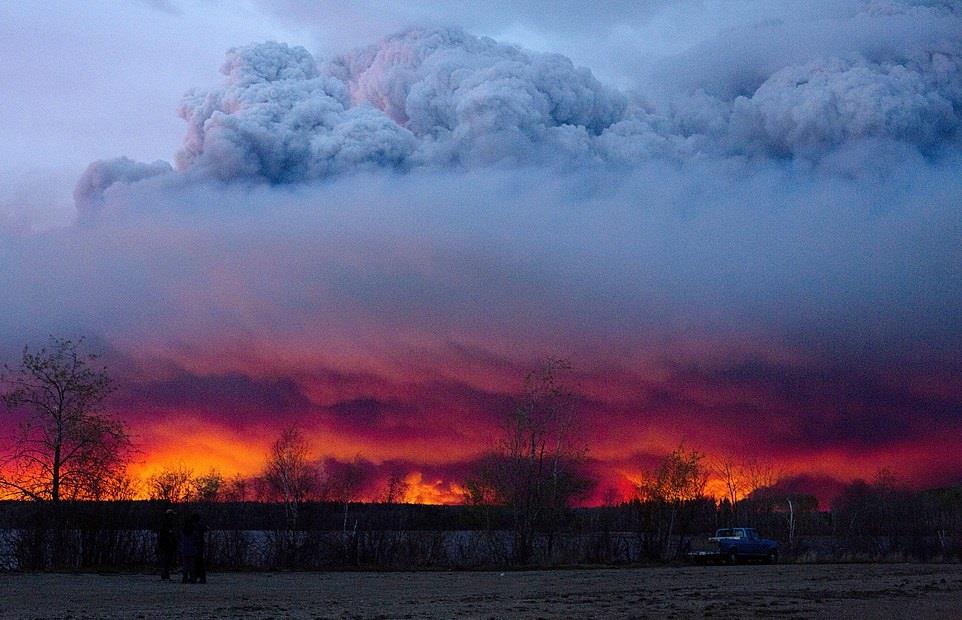
88,000 people have been evacuated and more than 1,600 homes torched in Anzac, Gregoire Lake Estates and Fort McMurray
Canadian officials are airlifting some 10,000 people who fled north from Fort McMurray, most of whom have been staying in oil sands work camps in the remote area.
The evacuees are being moved again because urban areas in the south are better able to support them, officials said. They hope the motorway to the south will become safe today to move the remaining 17,000 people, who are in danger of becoming trapped.
The Canadian government is working on finding temporary housing for families who lost their homes and belongings in the inferno. A rare province-wide fire ban has been declared to try to reduce risk of further blazes.
Many people had arrived in Anzac late on Tuesday, about 30 miles south of Fort McMurray but they had to move on again by Wednesday evening. They are now heading for the provincial capital of Edmonton.
As well as Anzac, the communities of Gregoire Lake Estates and Fort McMurray First Nation, an aboriginal reservation, were evacuated on Wednesday after the wildfires moved south.
There are still no known casualties from the fire but there was at least one vehicle crash with fatalities on the evacuation route.
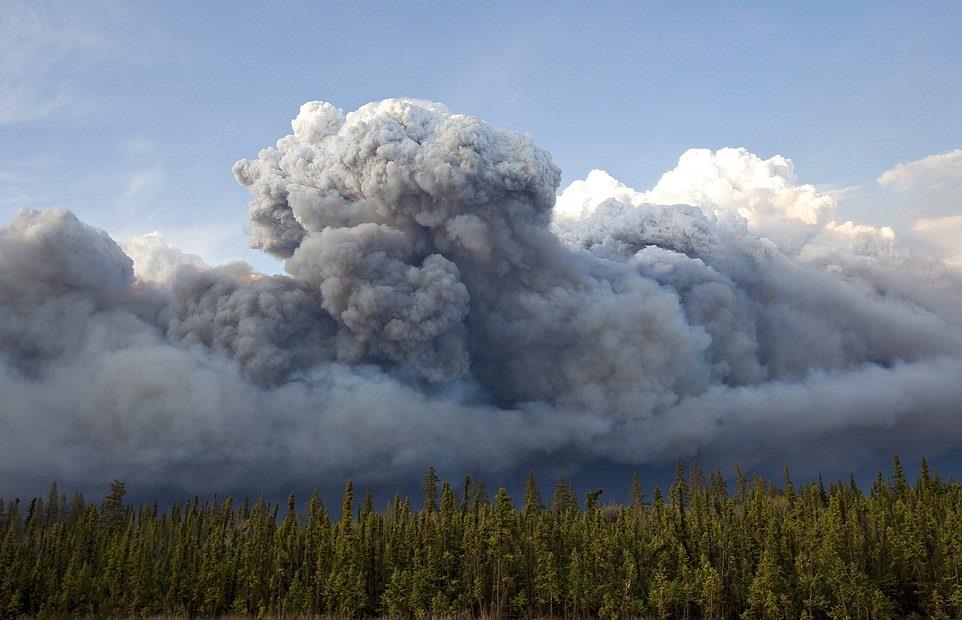
Smoke rises above trees as a wildfire burns in Fort McMurray, Alberta on Wednesday – the province has declared a state of emergency
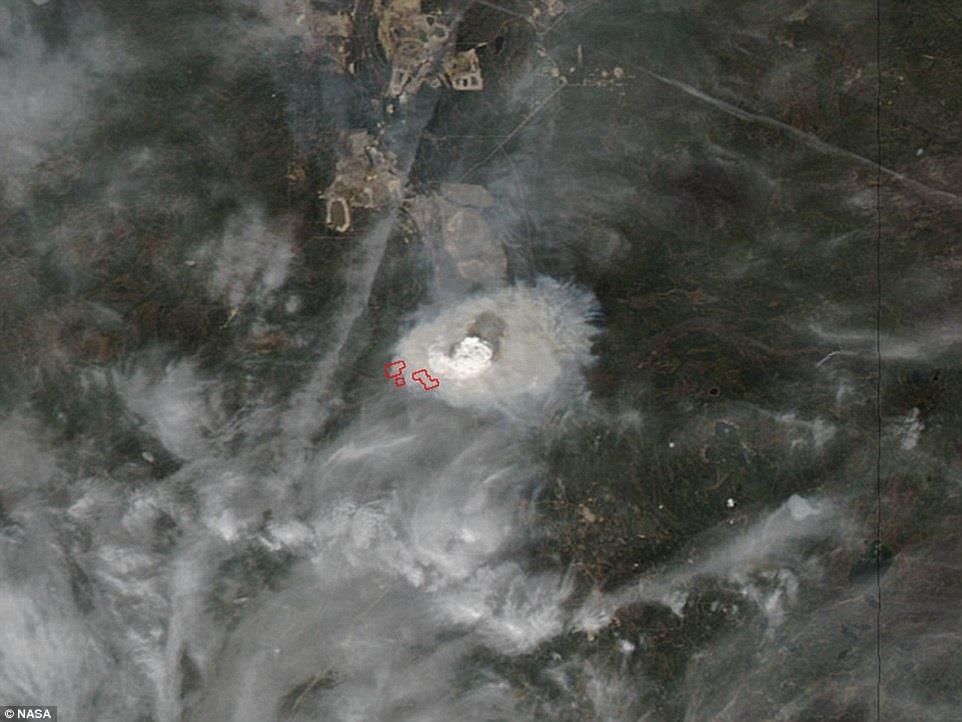
This satellite photo shows the fire has burned through approximately 7,686 hectares (almost 19,000 acres) in oil city Fort McMurray
Alberta Premier Rachel Notley warned city residents they faced a long wait before they would be able to return home.
She said: ‘The damage to the community of Fort McMurray is extensive and the city is not safe for residents. It is simply not possible, nor is it responsible to speculate on a time when citizens will be able to return. We do know that it will not be a matter of days.’
The chief of Fort McMurray’s fire department, Darby Allen said: ‘There are certainly areas within the city that have not been burned, but this fire will look for them and it will find them and it will want to take them.
‘The people here are devastated, everyone’s devastated, the community is going to be devastated. This is going to go on. This is going to take us awhile to come back from. But we’ll come back.’
Prime Minister Justin Trudeau branded the situation ‘terrifying’ during a speech in Parliament on Thursday, calling it ‘the largest fire evacuation in Alberta’s history’.
‘Homes have been destroyed. Neighborhoods have gone up in flames. The footage we’ve seen of cars racing down highways while fire races on all sides is nothing short of terrifying.’
Mr Trudeau called on all Canadians ‘to support our friends and neighbors at this difficult time,’ saying the federal government will match individual charitable donations to the Red Cross.
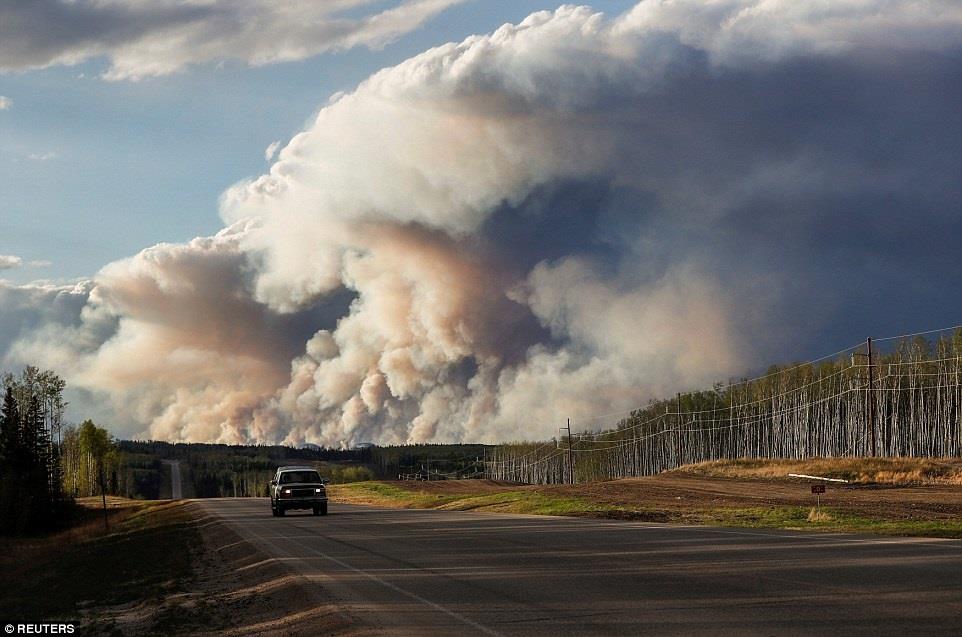
Smoke billows from the wildfires as a truck drives down the highway in Kinosis, Alberta – many residents had to be evacuated twice
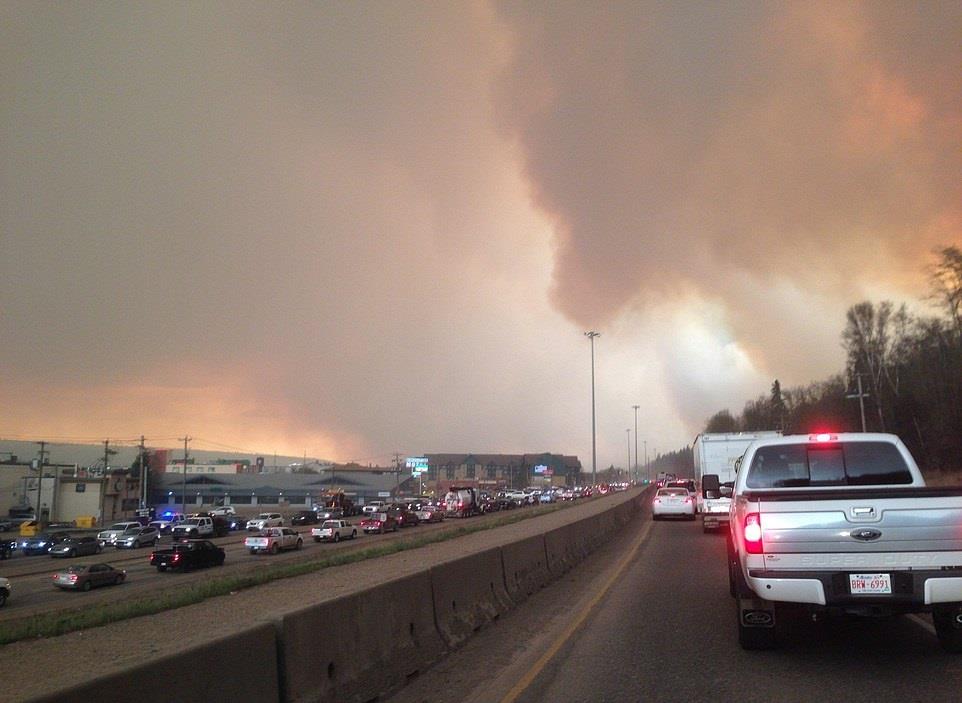
There was gridlock traffic as roads were closed to divert from the flames and thousands evacuated their homes on Wednesday
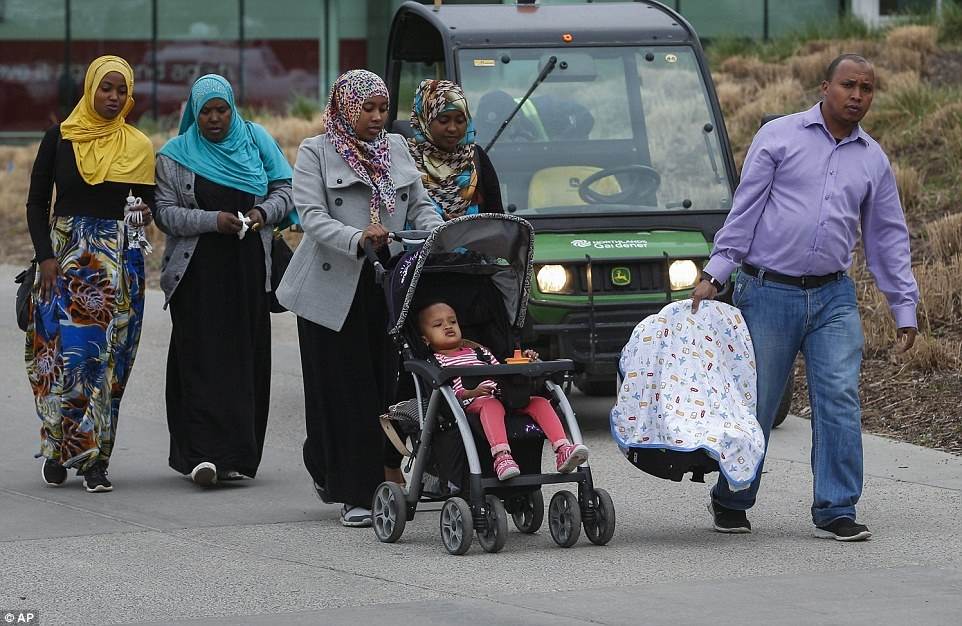
In the early hours Thursday, weary evacuees from Fort McMurray were sitting on buses headed for the provincial capital of Edmonton after being forced out of their temporary shelter in nearby Anzac
The blaze has already destroyed more than 1,600 homes and other buildings in Fort McMurray.
Another 19,000 are under threat, according to analysts and industry sources who estimate the bill for insurers is expected to exceed more than C$2 billion ($1.6 billion).
Resident Neil Scott told the BBC: ‘It was something you’d see in a movie probably. I was stuck between a concrete barrier and the fire and I thought ‘You know what? I might not make it out’.
‘There’s whole neighbourhoods that are gone. A hotel burned down, a gas station exploded. One lady that I met she actually was sheltered behind like an electrical box when it actually exploded and she felt a shockwave.’
An Alberta resident currently based in New York told Daily Mail Online: ‘My dad is in Edmonton, Alberta, right now working for Imperial Oil.
‘They can smell the smoke from the fire there – which distance-wise is like being able to smell a New York City fire in Washington DC, more than 250 miles away.’
Unseasonably hot temperatures and strong winds combined with dry conditions which transformed the forest in much of Alberta into an extreme fire risk.
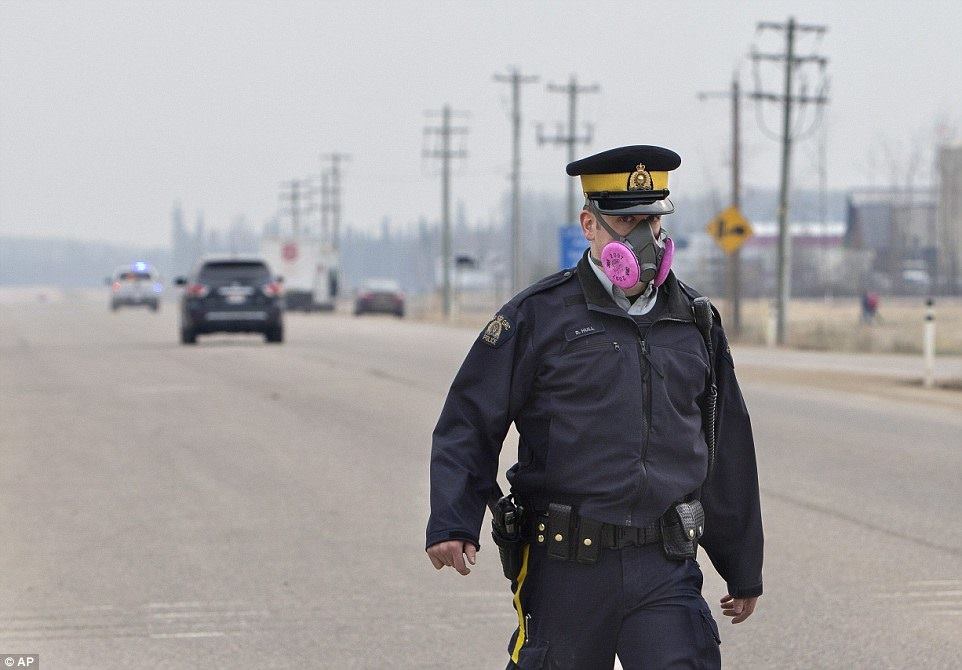
A police officer wears a mask while controlling a roadblock near a wildfire in Fort McMurray
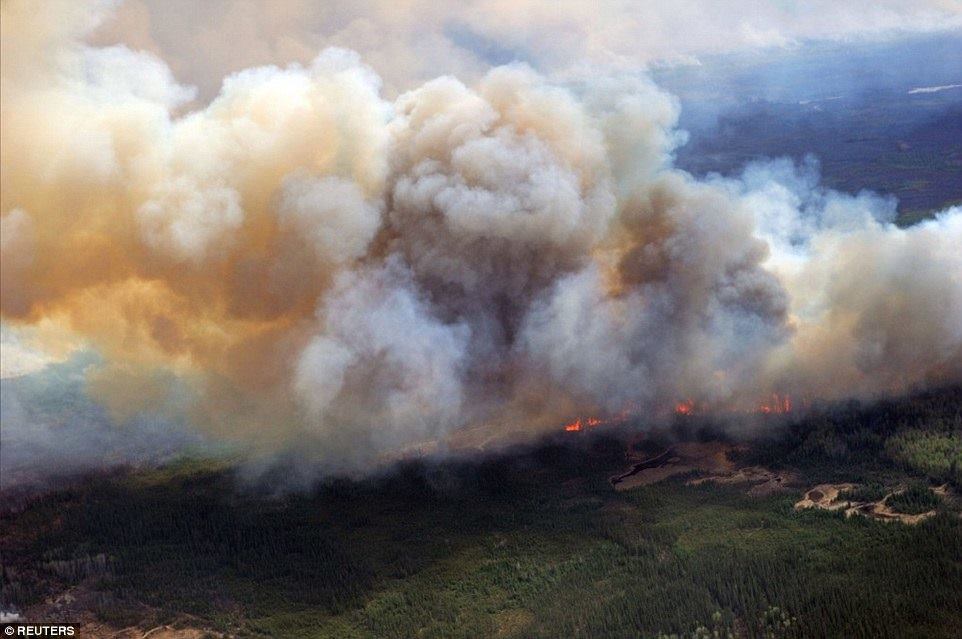
A Canadian Joint Operations Command aerial photo shows the scale of the wildfires in Fort McMurray (pictured Thursday)