





Books: Nine books to read in March
From a biography of Charlotte Brontë and an investigation of the lives of the apostles to a bitingly satirical novel from Nigeria – Jane Ciabattari picks new books for the month ahead.
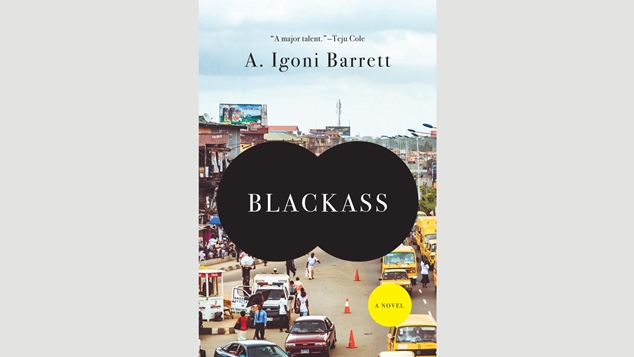
A Igoni Barrett, Blackass
Like Kafka’s narrator in Metamorphosis, Barrett’s Furo Wariboko wakes one morning transformed – shocked by his white skin, red hair and green eyes. Only one part of him remains black. He has a job interview, and despite troubles getting there (he’s penniless, hungry, forced to walk) he gets an offer. Soon he’s invited home by a beautiful woman named Syreeta who promises a massage. His new job, his new love, set Furo on a strange path, facing unexpected decisions. “He had always thought that white people had it easier, in this country anyway, where it seemed that everyone treated them as special, but after everything that he had gone through since yesterday, he wasn’t so sure any more.” Barrett’s satirical first novel makes an edgy comedy of social divisions and 21st Century manners while bringing a clamorous Lagos to life. (Credit: Graywolf)
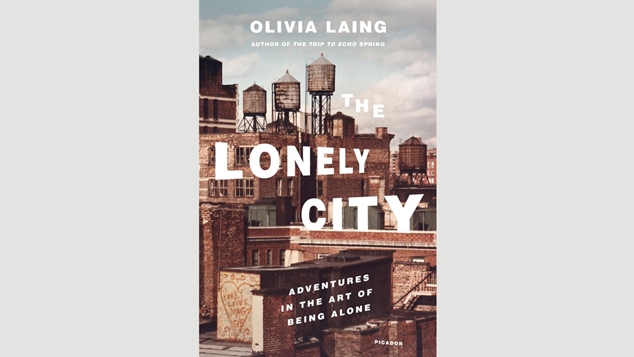
Olivia Laing, The Lonely City
“You can be lonely anywhere, but there is a particular flavour to the loneliness that comes from living in a city, surrounded by millions of people,” writes Laing as she opens her exploration into that state of internal isolation captured by Edward Hopper’s paintings. She devotes a section to Hopper, as well as Andy Warhol, Chicago outsider artist Henry Darger, and photographers David Wojnarowicz and Nan Goldin. SheLaing lives in an East Villaage sublet and a room in a former Times Square hotel, ponders images of Garbo in the city, watches Hitchcock’s vertigo, spends hours in the “endless city of the Internetinternet”– ” – all the while being excruciatingly aware of being alone. As in her critically acclaimed The Trip to Echo Spring, Laing creates a fluid, original and memorable collage of autobiography, reportage and biography. (Credit: Picador)
Greg Jackson, Prodigals
Jackson’s first collection begins with Wagner in the Desert, in which four “modern hustlers” – filmmakers and writers – spend a Dionysian week in California, determined to “chemically unfasten [their] fingers from their death grips on careers and wardrobes and topiarian social lives.” Marta and Eli set the agenda, based on their ‘Baby Bucket List’: “They had decided to do every last thing that a baby precludes, every last irresponsible thing, so, I guess, to be able to say, Yes, I have lived.” In this and seven other stories about people on the edge of desperation – an unhinged tennis champion who has withdrawn into the French countryside, a man and his former therapist who drive south as a dangerous storm bears down, a grandson witnessing a patriarch’s final days on an island in Maine – Jackson proves to be an original and astonishing new voice. (Credit: Farrar, Straus and Giroux)
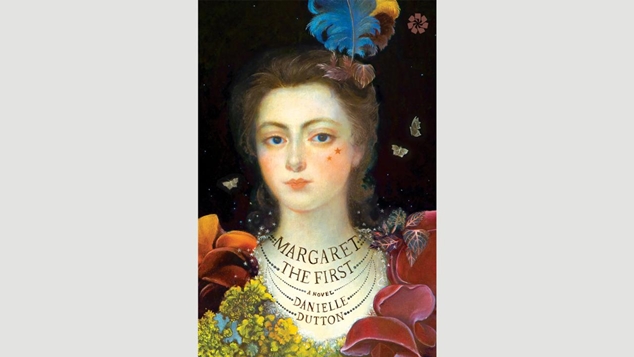
Danielle Dutton, Margaret the First
Margaret Cavendish was a pioneering author, poet and playwright of the 17th Century, who wrote utopian science fiction and was the first woman inducted into London’s Royal Society, the inner circle of the scientific revolution. As a young woman, she was a misfit in the court of the French-born English queen Henrietta Maria, and she showed no interest in social matters: “I had rather be a meteor, singly, alone.” Married to an older aristocrat, she sat in the corner as his friends, including Descartes, Hobbes and Pepys, debated the issues of the times. By her third book – Philosophical and Physical Opinions, 1655 – she argued that “all matter can think: a woman, a river, a bird.” With refreshing and idiosyncratic style, Dutton portrays the inner turmoil and eccentric genius of an intellectual far ahead of her time. (Credit: Catapult)
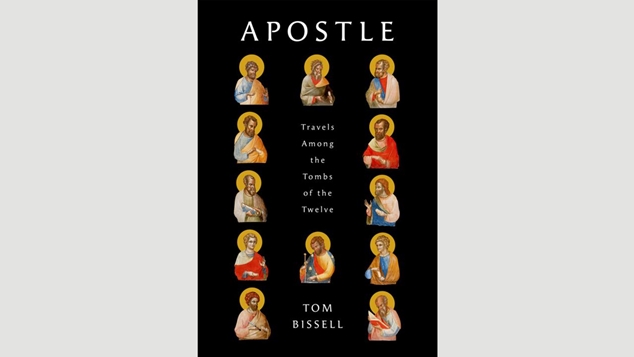
Tom Bissell, Apostle
From 2007 to 2010, Bissell, a lapsed Catholic and author of eight previous books, travelled to the resting places of Christ’s 12 apostles, visiting nine countries and more than 50 churches. His goal: “to explore the legendary encrustation upon 12 lives about which little is known and even less can be historically verified.” (Indeed, he notes early on, the New Testament “lacks complete agreement about who the 12 actually were.”) He begins in Jerusalem, with a search for the “field of blood” where Judas Iscariot, the betrayer, died, and ends with the 500-mile pilgrimage to the cathedral of Santiago de Compostela in Spain, which honors St James, the first apostle to be martyred. Bissell’s apostolic journeys create a fascinating and quirky blend of contemporary travel narrative and scholarly investigation into the New Testament. (Credit: Pantheon)
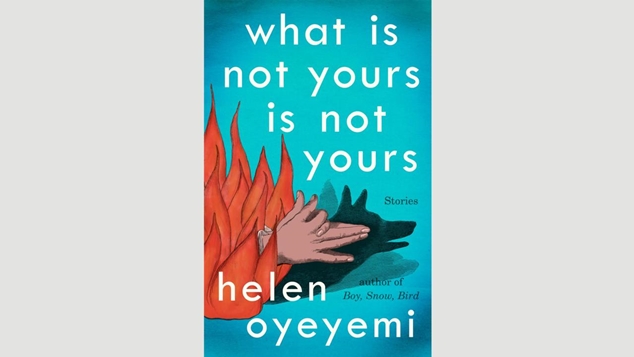
Helen Oyeyemi, What Is Not Yours Is Not Yours
Oyeyemi, one of Granta’s Best Young British Novelists, delivers an enchanting and beautifully crafted first collection of stories, linked by the recurrence of keys. In Books and Roses, a labyrinthine love story, one key opens a mysterious garden, the other a library of marvels. In Freddy Barrandov Checks…In? a circular key card is a clue: “once you check into Hotel Glissando, there’s no checking out again in your lifetime.” The narrator of ‘Sorry’ Doesn’t Sweeten Her Tea agrees to feed a friend’s Siamese fighting fish in his spooky “house of keys,” where doors won’t stay closed unless they’re locked. If a Book Is Locked There’s Probably a Good Reason for That Don’t You Think revolves around a locked diary. Oyeyemi’s storytelling is without parallel. (Credit: Riverhead)
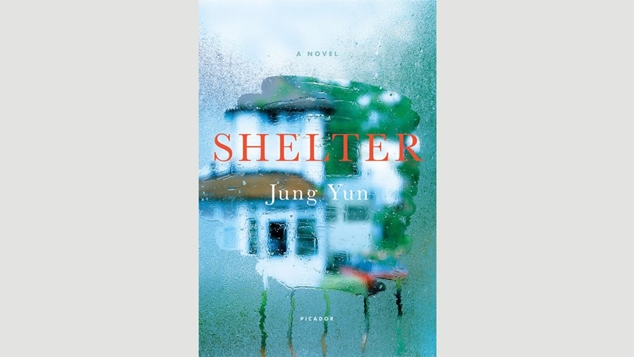
Jung Yun, Shelter
Kyung Cho, his wife Gillian and their son Nathan are at a crossroads. Although Cho is on track to tenure as a professor, he and Gillian are mired in credit card debt and shocked when an estate agent values their house at a figure that means it is “underwater” – worth less than they paid for it. Just as this unwelcome news sinks in, Kyung’s mother Mae appears in their backyard, naked, bruised and brutalised. Yun keeps the suspense and family drama racing neck and neck as Kyung discovers the shocking events of the previous 24 hours. As everyone in the extended family battles for equilibrium, Kyung’s childhood traumas emerge. Shelter is a suspenseful, illuminating first novel. (Credit: Picador)
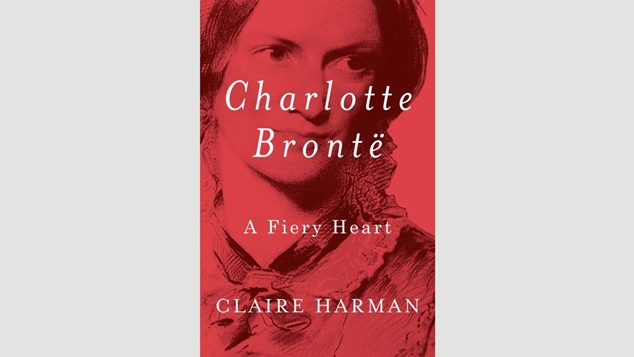
Claire Harman, Charlotte Brontë: A Fiery Heart
The biographer of Sylvia Townsend Warner, Fanny Burney and Robert Louis Stevenson offers a thorough re-examination of Charlotte Brontë’s life and work, timed to the bicentenary of her birth. Drawing upon letters not available to other biographers, Harman deftly links intimate personal events with Brontë’s literary output. She captures vividly the sickbed atmosphere of Charlotte’s early years, one reason “her heroines are all motherless, adrift, and starving for parental love.” She describes how her father’s reaction to becoming a widower led to the “anger, bewilderment, and pain” Charlotte expresses in Jane Eyre, the first novel to feature a child as a first-person narrator. And the wellspring of Brontë’s narrative intimacy? It’s an overpowering confessional reaction to her thwarted love for a married man, says Harman. This new book is a happy reminder of the life story that shaped a beloved author. (Credit: Knopf)
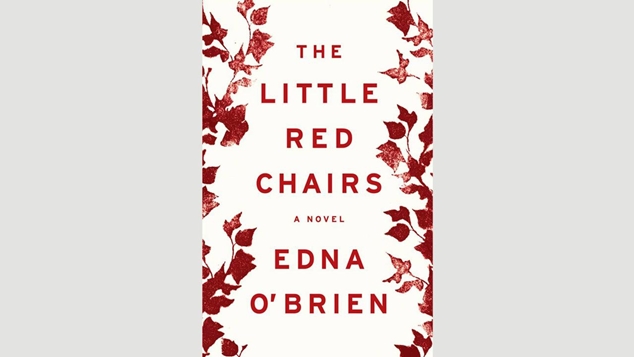
Edna O’Brien, The Little Red Chairs
In her powerful new novel O’Brien addresses the atrocities of war and “ethnic purification” in the 1992 Siege of Sarajevo and the 1995 Srebrenica massacre. When Vlad, a stranger from Montenegro who calls himself a healer, appears in an insular Irish village – “a freezing backwater that passes for a town and is named Cloonoila” – he’s an attractive man to Fidelma McBride, a married woman. But then he’s arrested and revealed as a war criminal. Fidelma becomes a pariah, victim of a revenge attack, an exile in London, a witness to Vlad’s trial in The Hague. “I could not go home until I could come home to myself,” she reflects. With her inimitable storytelling genius, O’Brien explores the nature of evil. (Credit: Little, Brown)