



His works are spooky and dreamy, but also funny and childish. Filmmaker Tim Burton created whole new worlds – often with a pencil or paintbrush before moving to film. Rare artworks by Burton are now on show in Germany.
Get inside Tim Burton’s head
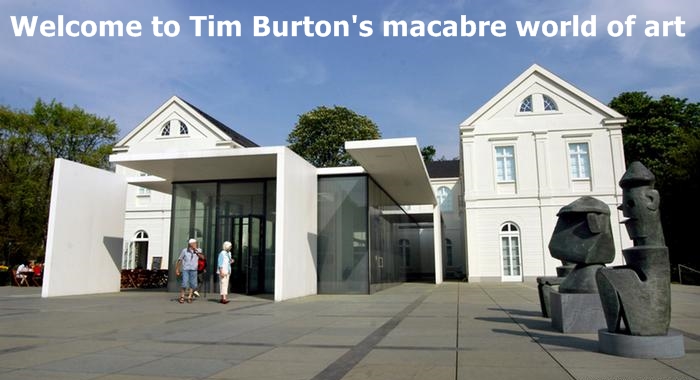
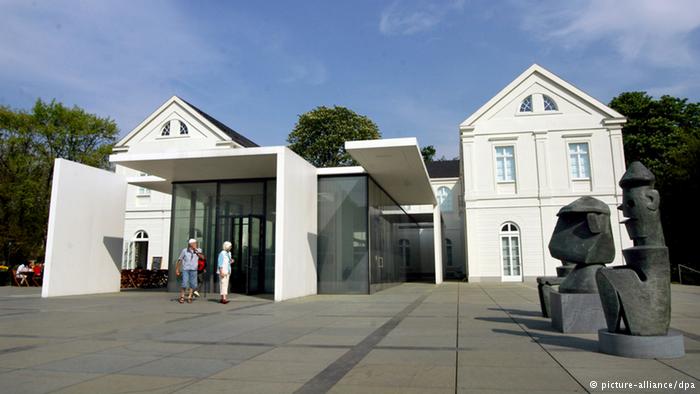
Rare drawings, paintings and sketches now give exceptional insights into how filmmaker and artist Tim Burton actually thinks. The Max Ernst Museum in Brühl, Germany, is dedicating its current exhibition, “The World of Tim Burton,” to the man who’s known for his quirky take on horror.

Burton borrows from Max Ernst
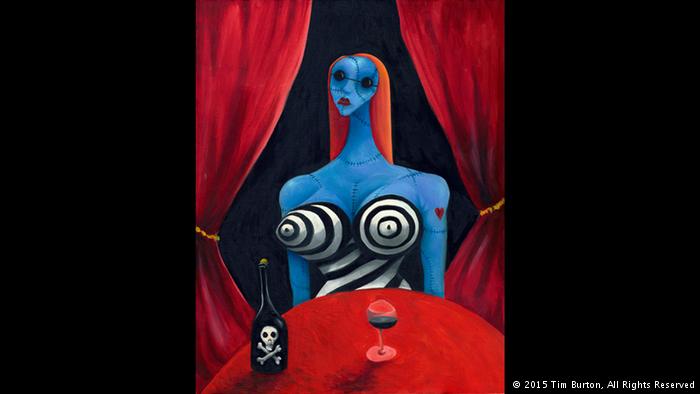
It’s no coincidence that the tiny Max Brühl Museum stumbled upon Tim Burton. The American artist’s work bears an uncanny resembles to that of surrealist Max Ernst, who was born in Brühl in 1891 – like “Blue Girl with Wine” from 1997.
From Tokyo to Brühl
The small museum in the 44,000-person town of Brühl is the only in Germany to show the Burton exhibition, which has already been to the MoMA in New York, Toronto, Melbourne, Prague and Tokyo. After Germany, it will head to Brazil.
Alternative realities
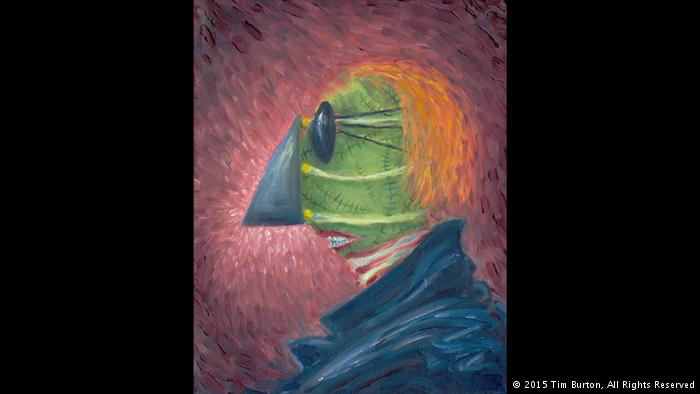
For Tim Burton, reality is not singular and variations on the norm are the common thread in the Brühl exhibition. Using alienating techniques like masks or coverings, Tim Burton plays with reality – like here in “Green Man” from 1999.
Vision of ‘the others’
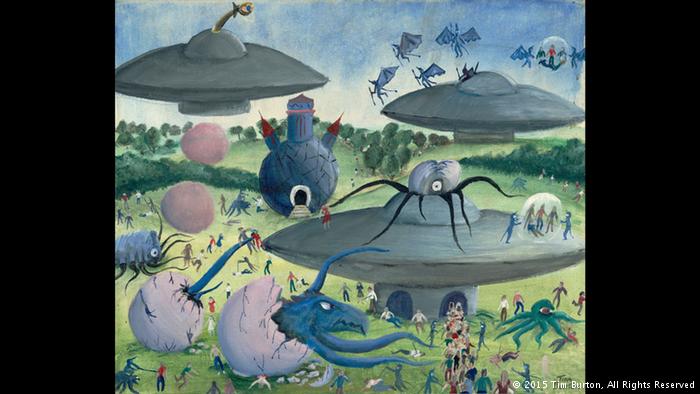
Other worlds have always interested artists and filmmakers. Burton often sketches ideas that later turn up in his films. “Saucer and Aliens” was created from 1972-74 and was reflected on many years later in films like “Mars Attacks!” (1996) and “Planet of the Apes” (2001).
Fairytales rewritten
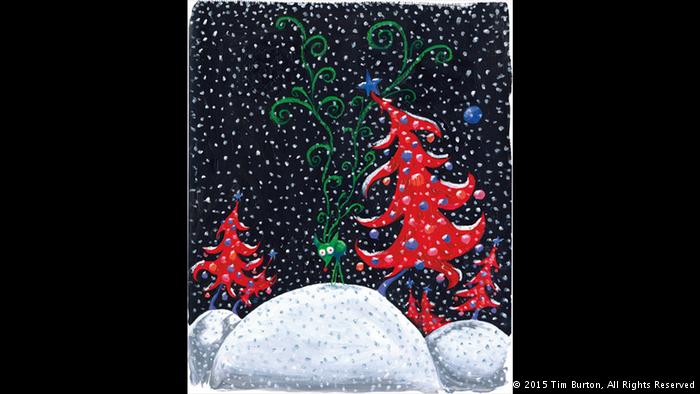
Fairytale figures often find their way into Tim Burton’s pictures as well as his films. Sometimes he creates abstract, fairytale-like settings, while at other times he remakes a classic – like “Alice in Wonderland” in 2010. This reindeer from 1994-1999 looks like he could become the main character in a yet unwritten Christmas tale.
Dark and childish
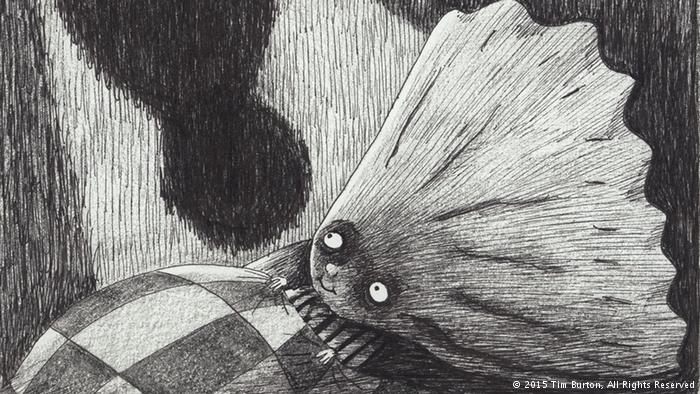
Comic often meets horror in Tim Burton’s paintings, drawings and films. This drawing from 1997 is typical of Burton’s style: The dreamy, black-and-white tones seem to contradict the childish face.
The artistic evolution of a work
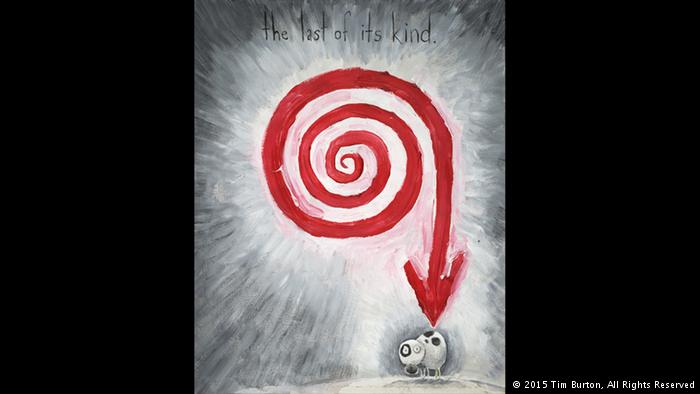
Drawings become films, sketches turn into screenplays and oil paintings are shaped into scenarios for full-blown blockbusters. In many cases, Tim Burton’s ideas can be traced back in time in his art. Usually the public can only admire his oeuvre in the cinema. But now a selection can be seen at the Max Ernst Museum in Brühl through January 3, 2016. (Pictured: “The Last of Its Kind” from 1994).